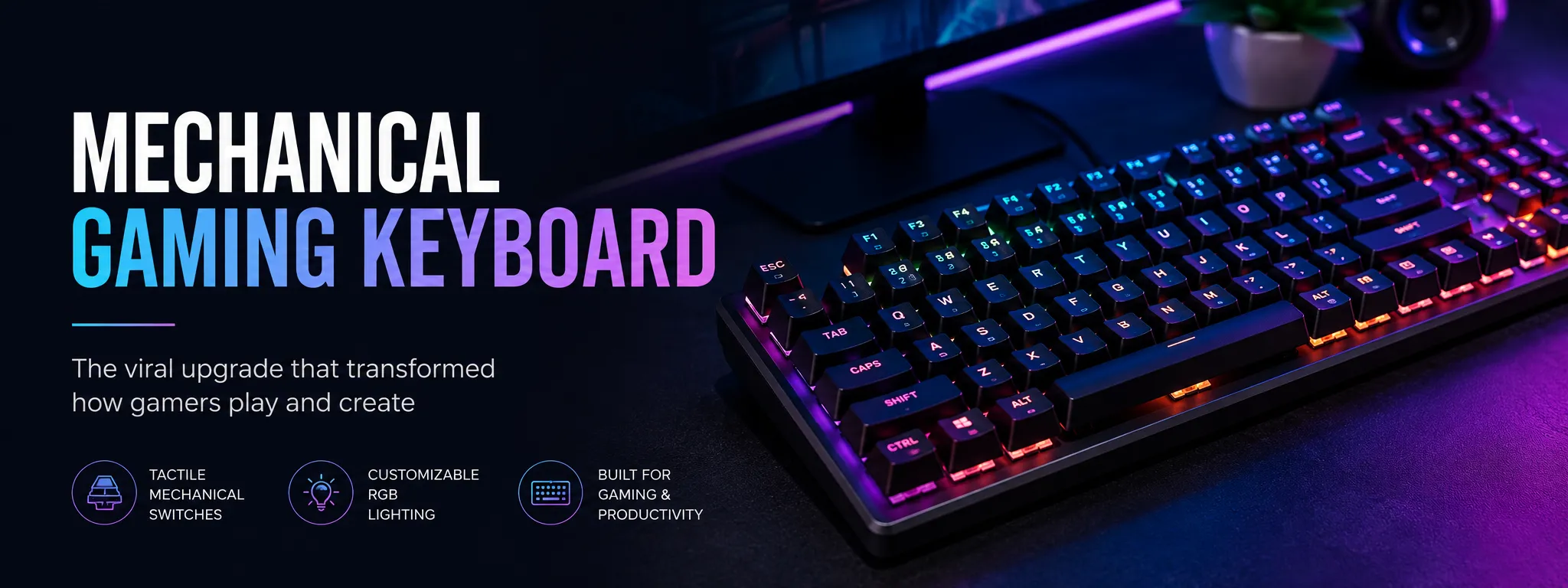
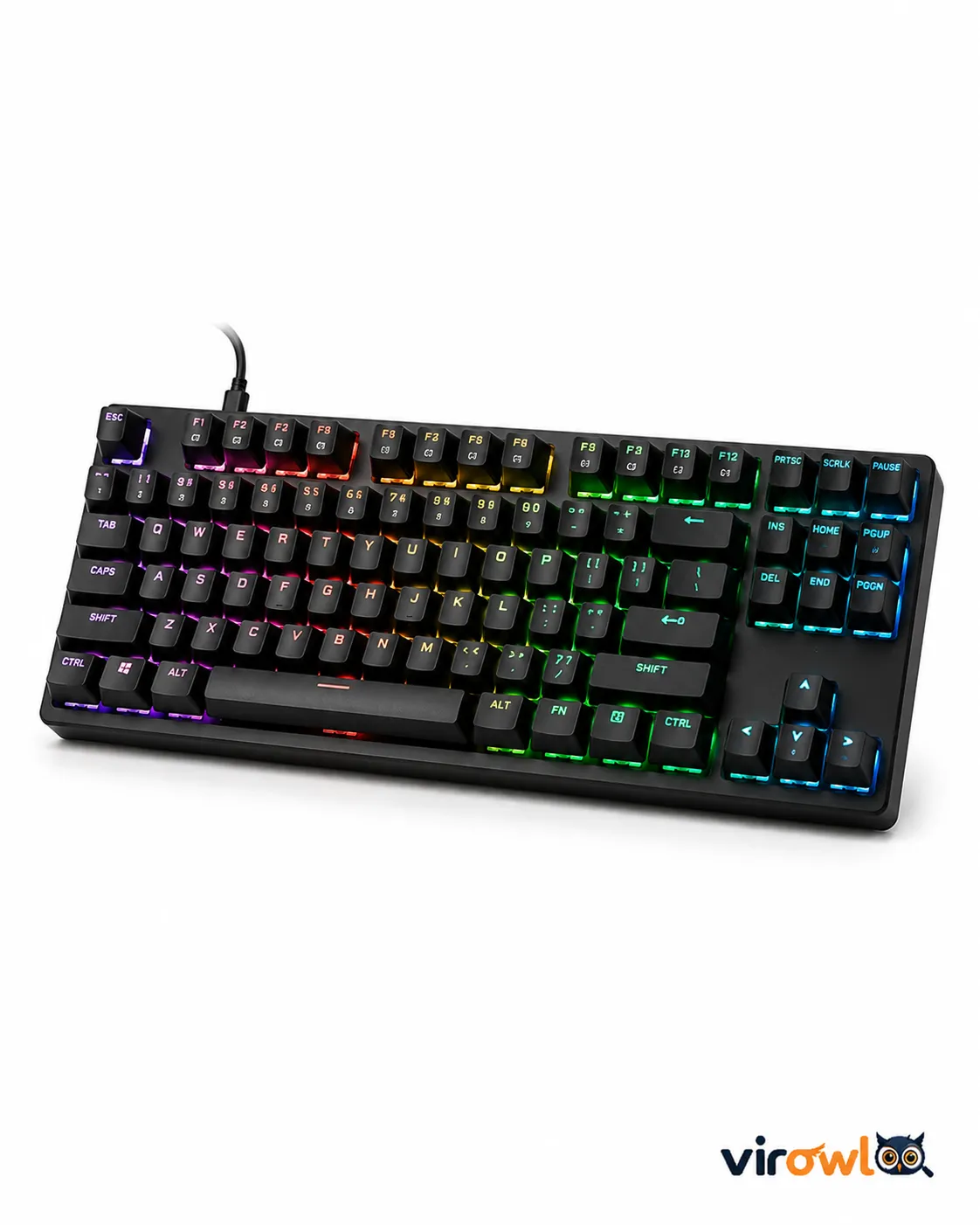
Mechanical Gaming Keyboard
A keyboard built around tactile mechanical switches instead of a rubber membrane — now a $2-2.7 billion global market, with gaming alone driving nearly two-thirds of it.
Mechanical keyboards use individual physical switches under each key instead of a single rubber membrane sheet, giving more precise, tactile, and durable keystrokes — a meaningful upgrade for gaming, typing speed, and long-term reliability. What was once a niche enthusiast category has become mainstream gaming and productivity equipment.
From enthusiast niche to mainstream gaming standard
The category's modern revival traces to around 2010, when dedicated gaming keyboard lines from Corsair, Razer, Logitech, and SteelSeries established mechanical switches as standard competitive-gaming equipment — driven by esports growth and a generation of PC gamers willing to pay a premium for faster, more reliable input.
The remote-work shift added a second growth driver entirely separate from gaming: home offices created sustained demand for higher-quality, more comfortable daily-use keyboards, pulling mechanical keyboards further into the mainstream productivity market beyond gaming alone.
What actually differentiates one from another
Switch type is the biggest factor in how a board feels — linear switches are smooth with no tactile bump (fast, quiet-ish), tactile switches have a noticeable bump at actuation (a typing-feel favorite), and clicky switches add an audible click on top of that bump (loudest, most polarizing in shared spaces).
Hot-swappable switches (letting you change switch types without soldering) and wireless low-latency connections are the two features driving most recent premium purchases, per industry analysts — both let a single board be customized well after purchase rather than locking in one feel permanently.