Massage Gun
A handheld percussive therapy device for muscle recovery — a category Theragun turned from a niche clinical tool into a $1.5–2.8 billion global market in under a decade.
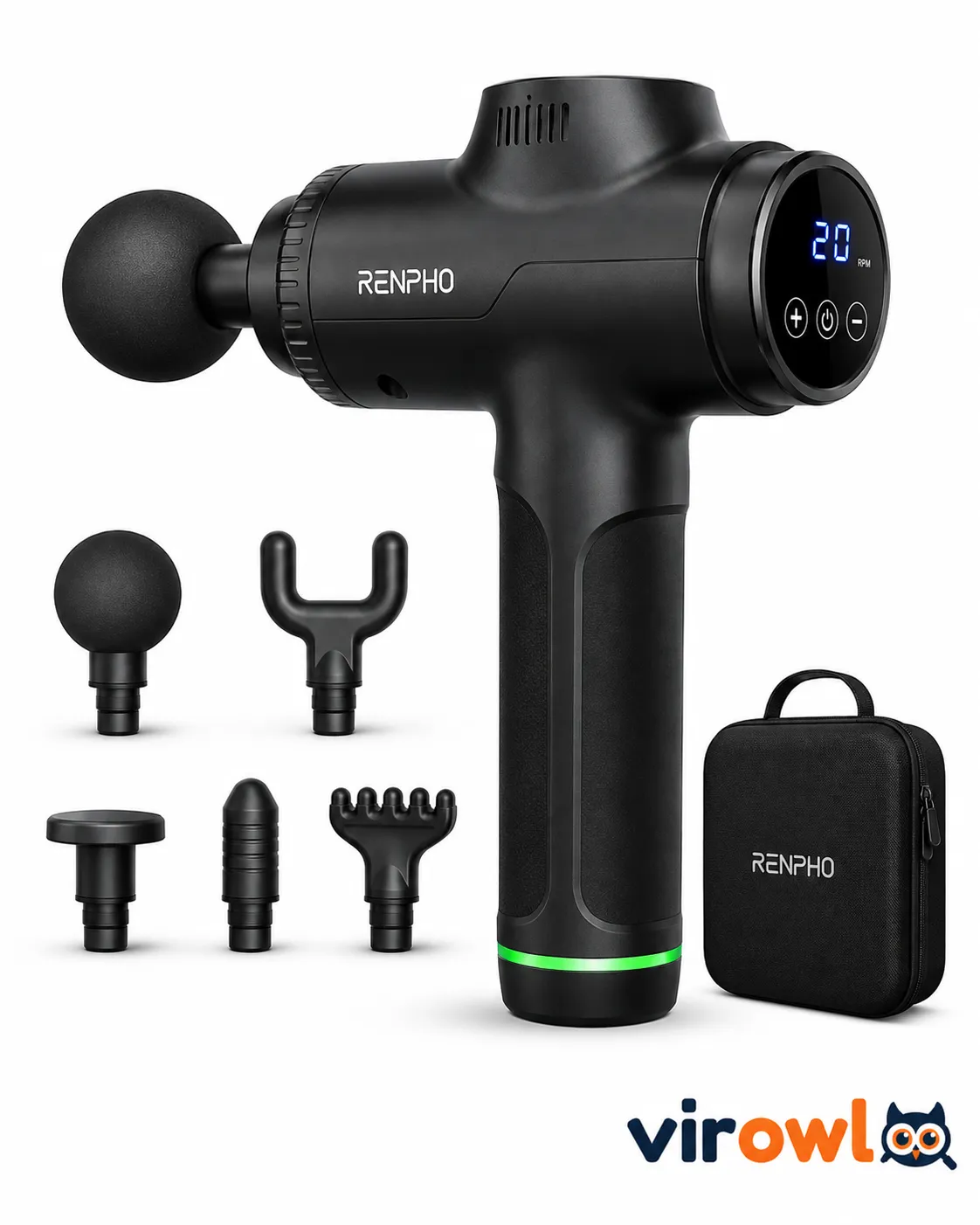
A massage gun uses a motorized, oscillating head to deliver rapid percussive impacts into muscle tissue — the effect people are chasing is the same deep-tissue relief of a sports massage, on demand, at home. It's gone from a niche recovery tool used mostly by physical therapists to a mainstream fitness accessory sold at every price point.
How the category actually got this big
Therabody (originally branded Theragun) pioneered percussive therapy as a consumer category in 2016 and has since sold over 6.5 million devices, positioning itself as the clear category leader — its devices are used by professional teams across the NBA, NFL, and Premier League, which has driven a lot of the credibility behind the whole category.
The market has kept growing well beyond Therabody alone: independent estimates put the global massage gun market between $1.5 billion and $2.8 billion in 2025, with continued growth projected through the early 2030s as percussive therapy shifts from a pro-athlete tool to an ordinary home-fitness accessory.
What the specs on the box actually mean
Percussion-per-minute (PPM) is the speed of the striking head, typically 1,200–3,200 depending on model and intensity setting; amplitude is how far the head travels with each strike (roughly 8–12mm on most models) and is a bigger factor in how deep the effect feels than PPM alone; stall force is how much pressure you can apply before the motor bogs down, which matters most for larger muscle groups like the back and glutes.
Budget brands like RENPHO and TOLOCO consistently earn respectable 4.2–4.4 star average ratings despite costing a fraction of a premium Theragun — the real gap between budget and premium tends to show up in noise level and battery reliability over time, not raw percussive power.