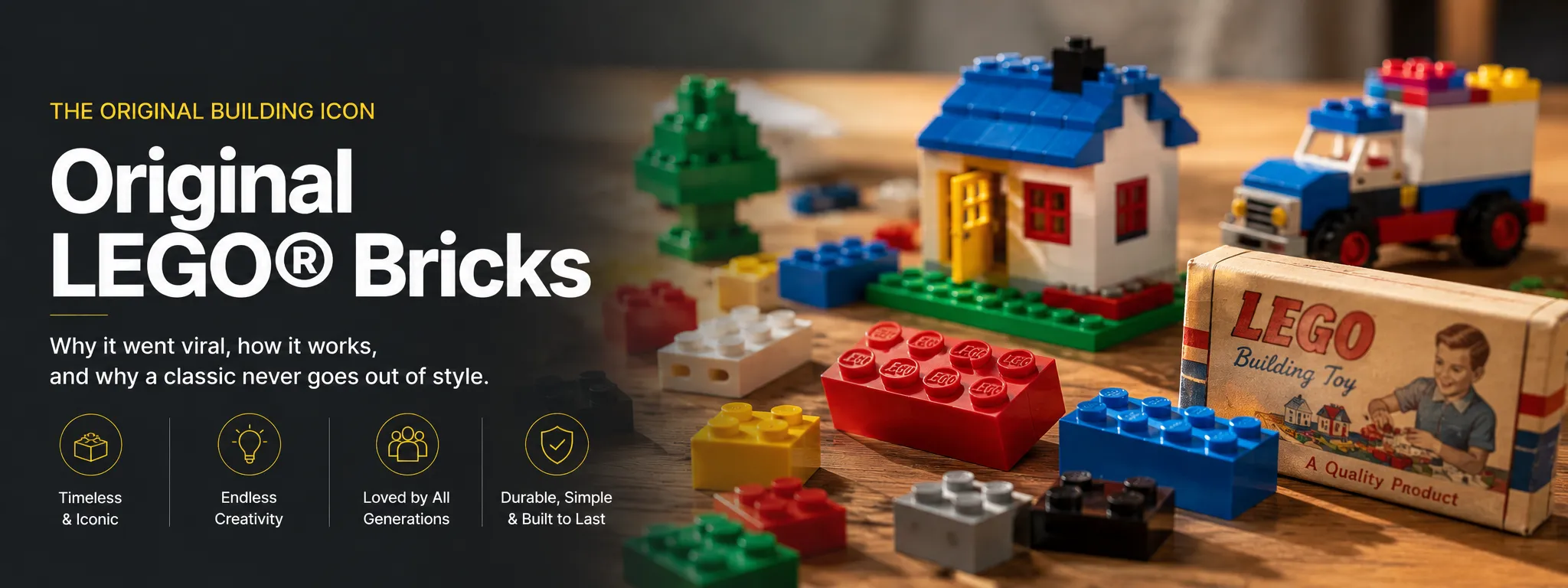
Original LEGO Bricks
Interlocking plastic bricks from a small Danish carpenter's workshop — now the single most valuable toy brand in the world, with 2025 revenue topping $13 billion.
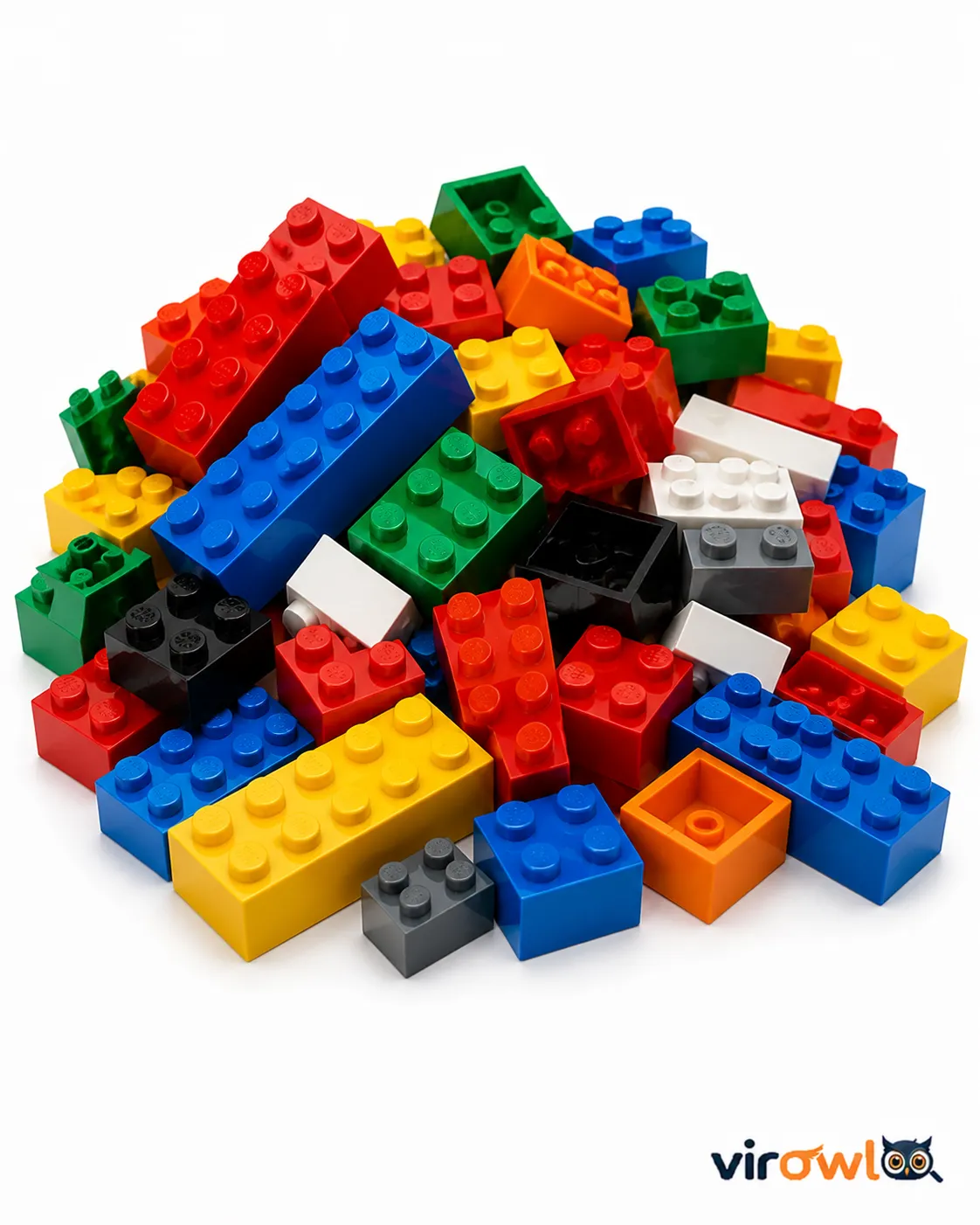
LEGO bricks are the interlocking plastic building blocks that have stayed essentially unchanged in their core connector design for over 50 years, letting sets from decades apart still snap together. It's widely regarded as the best-selling toy brand of all time, and unusually for a toy company, it's grown its market share every year even as digital entertainment has eaten into the wider toy industry.
From a bankrupt carpenter to the world's biggest toy company
LEGO's founder, Ole Kirk Christiansen, was a carpenter in Billund, Denmark, who turned to toymaking after his workshop burned down — twice — and later shut down during the Depression. The company began making wooden toys in 1932 and didn't start producing its now-iconic plastic interlocking bricks until 1949.
The brand's growth has been strikingly resilient: 2025 revenue rose 12% to roughly $13 billion, with consumer sales growth (16%) more than double the broader toy industry's (about 7%) — meaning LEGO isn't just riding a growing market, it's actively taking share from competitors.
How a 2014 movie changed the company's trajectory
The Lego Movie's 2014 release is widely credited as a turning point that pushed Lego past Mattel and Hasbro to become the world's largest toymaker by revenue that year, on the back of a wave of spin-off sets and renewed cultural relevance well beyond its traditional kids' construction-toy audience.
That halo effect has continued through digital extensions of the brand rather than just physical sets — LEGO Fortnite, a videogame collaboration, has surpassed 1 billion cumulative player hours since launch, showing the brand successfully extending its identity into spaces well outside a physical toy box.