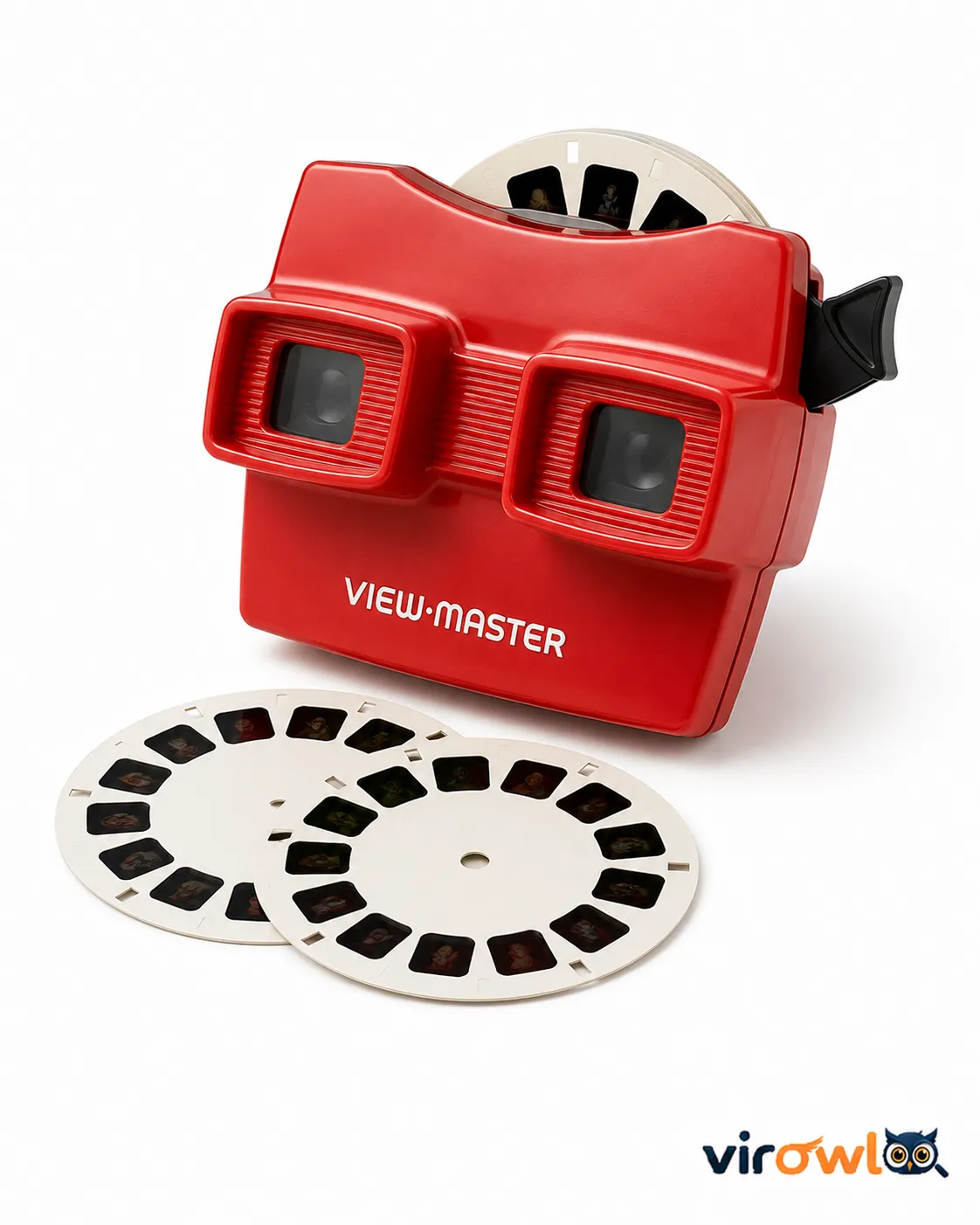
View-Master
A 3D stereoscope invented for adult tourists at the 1939 World's Fair — that soon got taken over almost entirely by children, and outlived every one of its original corporate owners.
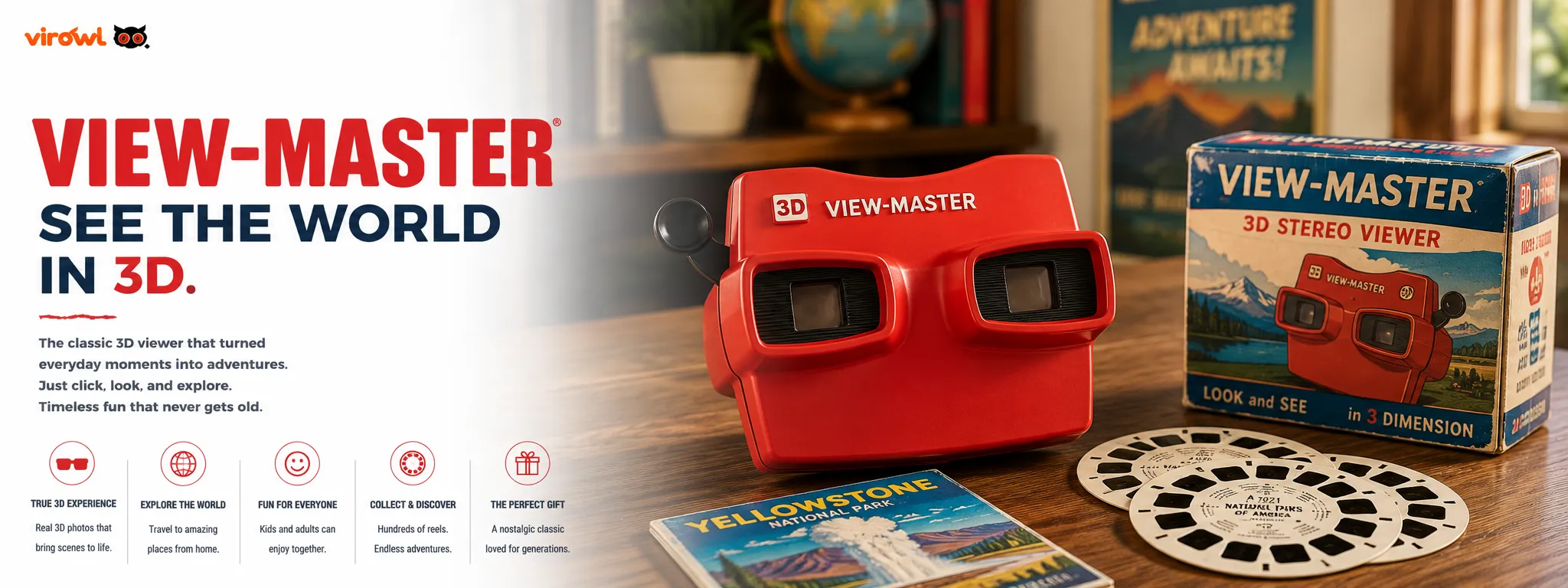
The View-Master is a handheld viewer that shows seven pairs of tiny stereoscopic photos on a rotating cardboard reel, creating a 3D image when viewed through its twin eyepieces. It's stayed in some form of production for over 85 years, passing through five different corporate owners along the way.
Built for tourists, not kids
The View-Master was invented by William Gruber, a German-trained organ maker and hobbyist photographer, who had rigged two Kodak cameras together to shoot stereo images. He partnered with Sawyer's — at the time the largest producer of scenic postcards in the US — to turn the idea into a consumer product.
It debuted at the 1939 New York World's Fair as a direct alternative to the scenic postcard, sold in photography shops and gift stores, with early reels focused on tourist destinations like Carlsbad Caverns and the Grand Canyon — squarely aimed at adult travelers, not children.
A slow drift toward toy shelves — and five owners since
The shift toward children's entertainment happened gradually rather than through any single relaunch, as reel content expanded from travel photography into cartoons, storybooks, and licensed characters. By 1965, the View-Master line alone made up 37% of Sawyer's total sales.
The brand has changed hands repeatedly since: sold to GAF in 1966, then through Tyco and Mattel, and now sits under Mattel's Fisher-Price division — one of relatively few toys from the 1930s that's been continuously reinvented by five different owners rather than simply discontinued.